
The hand of man has negatively impacted nature through industrialization, yet the hand of God enables our minds to positively impact our communities, that in the process we may ourselves be convinced of His everlasting love. Design is a way for us to remember the beauty God has created for us in nature.
Click image below to Portfolio:
Sketching a street’s future…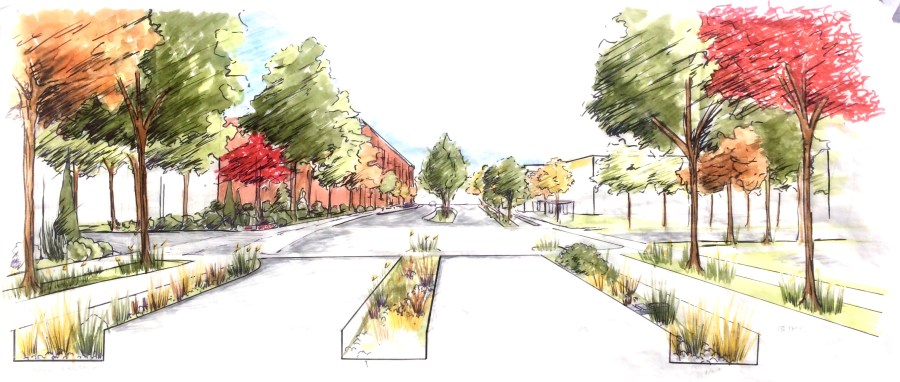
Sketch description: A paved street with no vegetation can be transformed into a green corridor for the well-being of its residents and benefit of local/migrating birds. Phytoremediation is implemented along the street to reduce toxics from contamination, as well as beautify the landscape…
PROJECT SAMPLE I: Chicopee’s Greenway Plan, MA
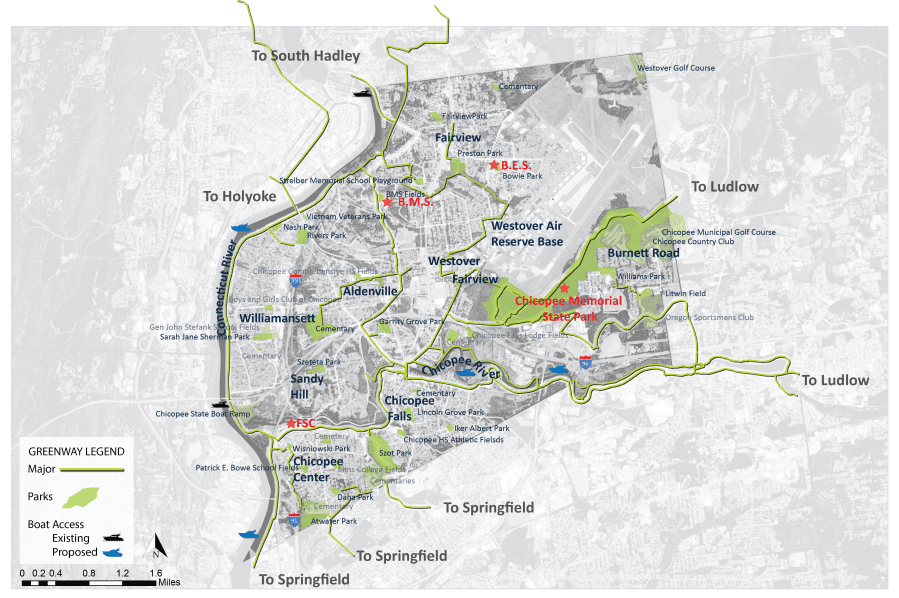 A GIS areas of conflict study where design interventions could benefit residents by granting bicycle and walking access to the Chicopee State Park grounds. This study included surrounding areas where the continuation of a greenway could expand through Chicopee and its neighboring towns and cities.
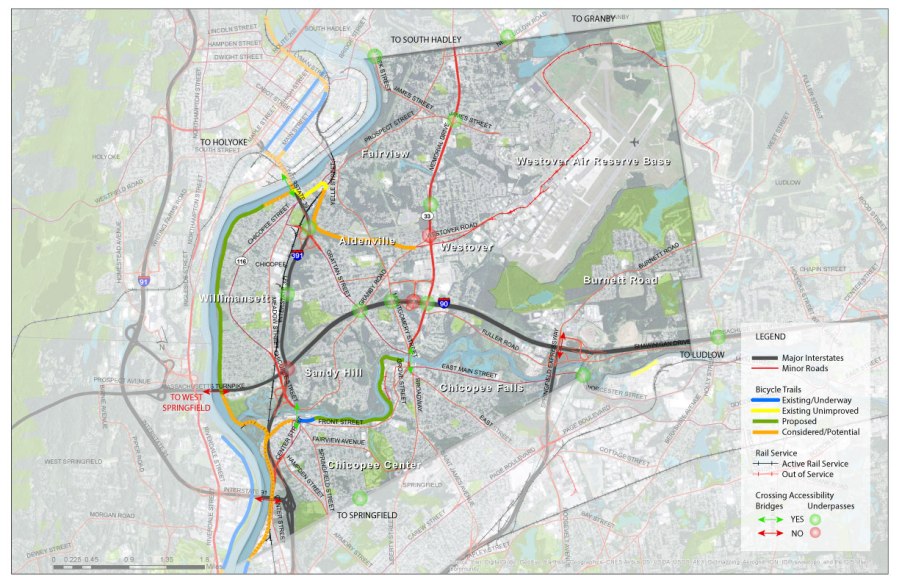 Areas of conflict are highlighted in red circles and possible design interventions are highlighted in green circles.
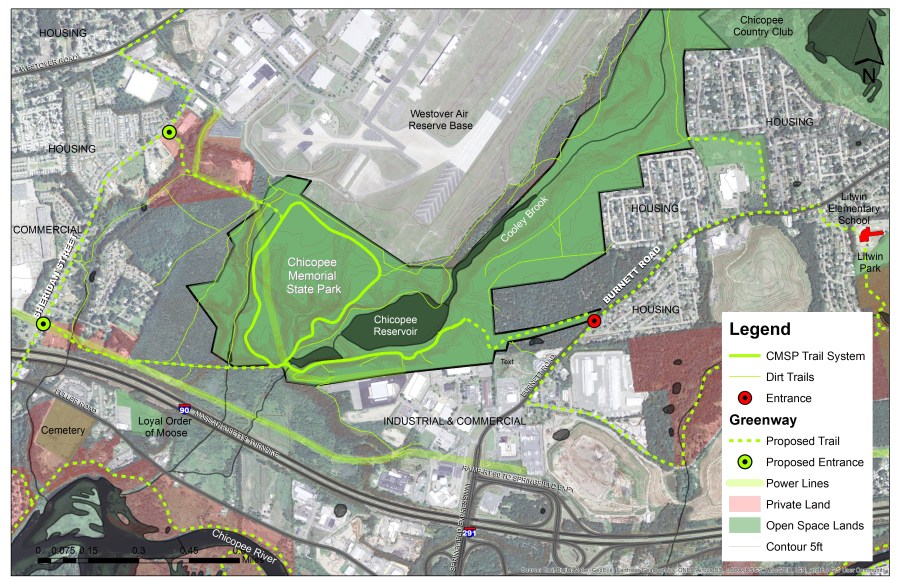 Area of interest, the Chicopee State Park, showcasing proposed design interventions. Below are two renderings of how two areas of entrance could be designed to facilitate pedestrian and bicycle access.
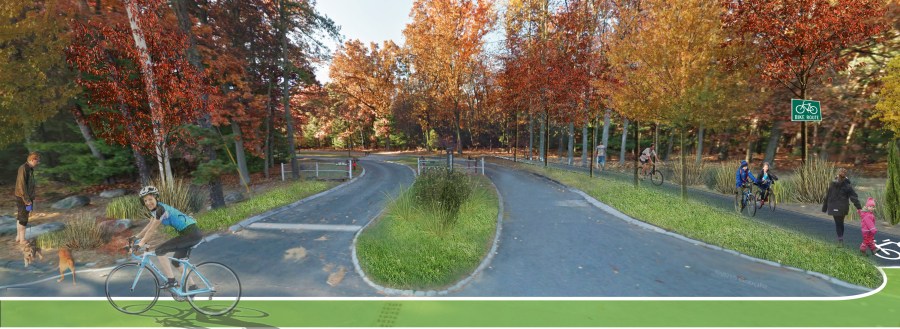 Main entrance to park, on right, a proposed pedestrian/bike path with an array of trees on both sides to buffer and divide main road.
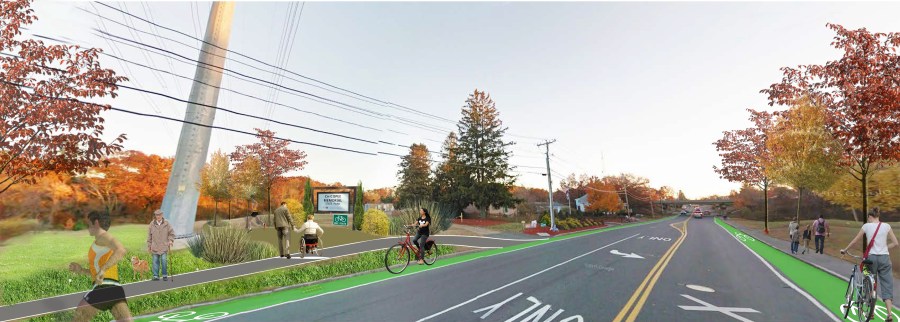 Proposed pedestrian secondary entrance, closer to residential area.
PROJECT SAMPLE II: Long Island “An Urban National Park,” MA

This landscape is to become a welcome center for visitors to Long Island. It provides orientation to and interpretation of the Boston Harbor Islands and National Park as a whole, and to the cultural landscape of Long Island specifically. Nine of the Harbor Islands are represented as raised gardens, featuring native plant communities characteristic of each island, set in a large, open meadow with views of the harbor. At the center, the outline of Long Island is an arrival plaza with interpretive displays.
The concept is to provide an educational, informative experience by sharing historical and current conditions of the Boston Harbor Islands, having Long Island as the center/main destination.
Program, 14 acres
- Interpretive landscape, an informative map of Long Island
- Chapel re-purposed to provide visitor contact/services
- Public arrival by car, bicycle, foot, kayak; service dock for park boats
- Parking for 32 cars and 3 buses
- 6 overlooks with water views
- Existing paved road used for bicycles and authorized vehicles only
PROJECT SAMPLE III: The Pedal Waterfront, Brooklyn, NY
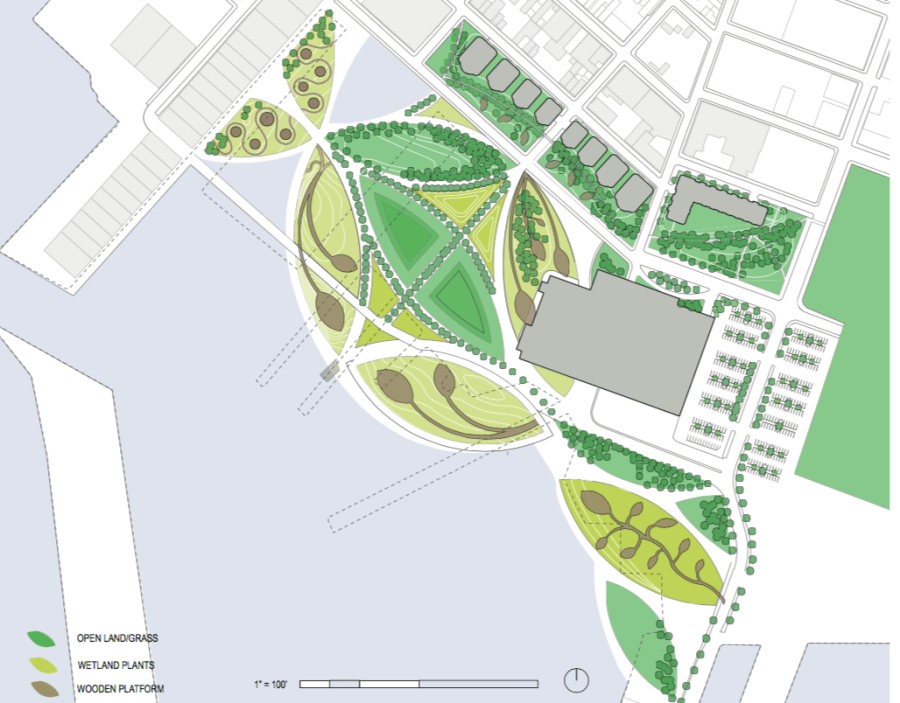 The goal of the Petal Waterfront is to create a natural healing atmosphere, an “outdoor clinic” that helps people exercise and release stress by connecting with nature. Green areas are designed to attract wildlife and pockets where massive amounts of water can be collected before reaching people’s residents in case of a flood emergency. The housing units are architecturally designed to be detached from the base and float.
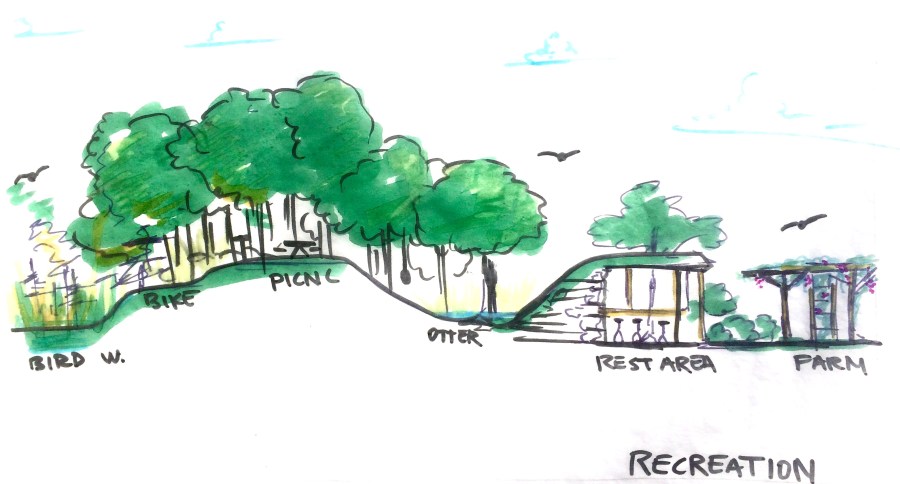
 There are seating areas along the bike and pedestrian paths, on the rocks, and at the beach, these may be used to study, read, sleep, and relax. The bike path connects the shopping plaza on the west side to IKEA. There are oyster nurseries to help clean the water, as well as small pools of water for people to observe. Nearby, the petal wetlands have paths and decks to observe birds and rest areas to sit and eat.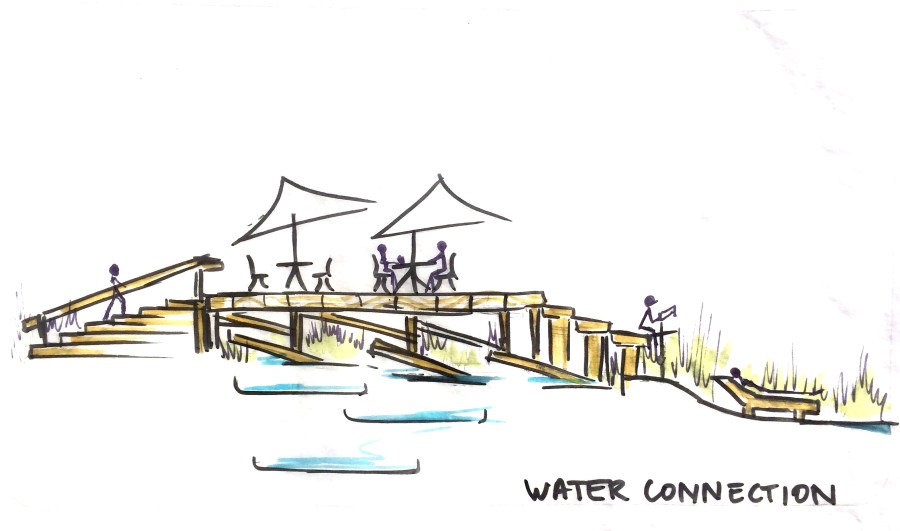
The housing development is a forested park with picnic tables and grills. It is meant to be used by residents as well as neighbors. There is a walking path that connects the housing to the athletic fields. Parking for residents is located in the basement. The first floor of the XL and L units are for commercial use.
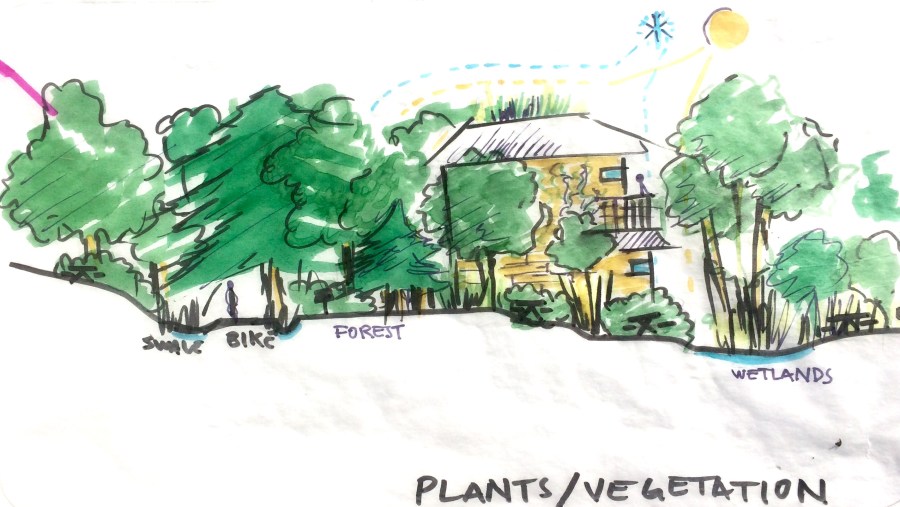
The bicycle path connects from IKEA to Connover Street, a busy shopping street. Most of the plants are salt resistant, there are wetland plant depressions in the housing area to preserve water on site.
 Tapia
Tapia 